📄 Digital book in PDF · read it on your phone or print it
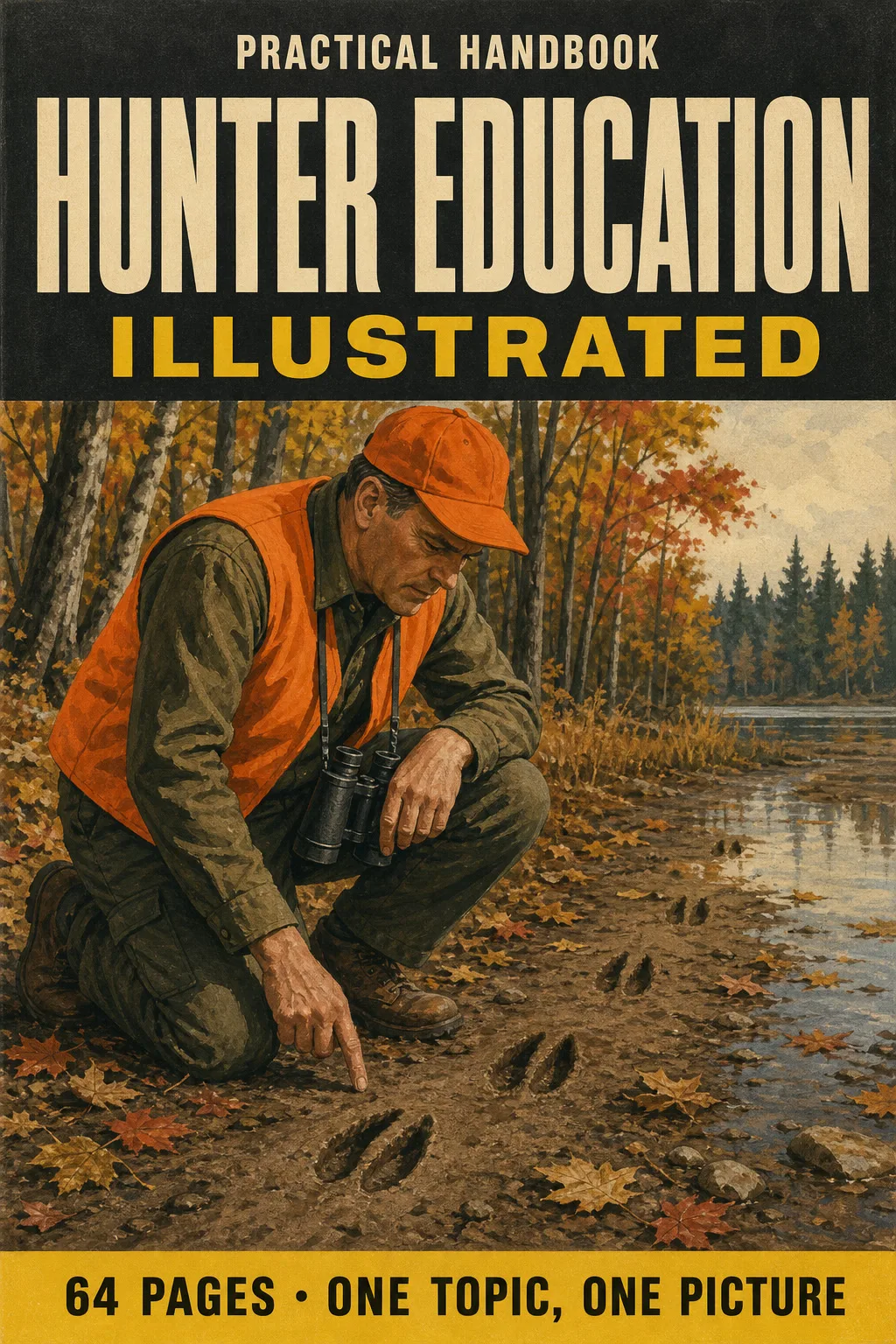
Muzzle control, safe carries, zones of fire, tree stands, cartridges, shot placement, wildlife ID, ethics and hunting laws: the topics state courses share, each on its own page. The drawing first, then what you need to remember. 64 illustrated pages.
🔒 Secure checkout · PDF by email · 30-day guarantee
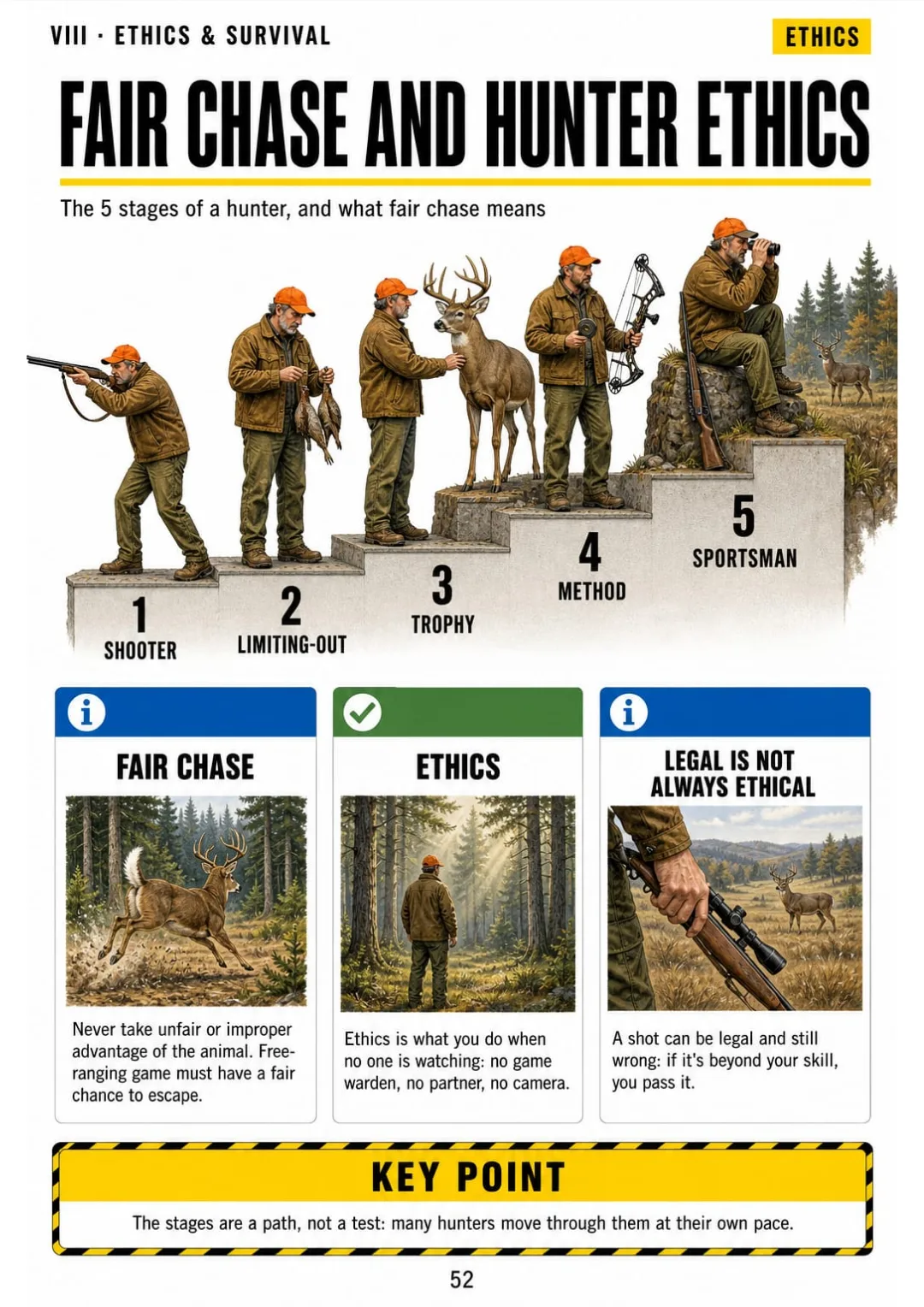
Every page has one big drawing and a box with the rules and numbers you need to know:


Swipe to see more →
These are real pages from the book. The table of contents is the full one: 9 parts and 60 topics.
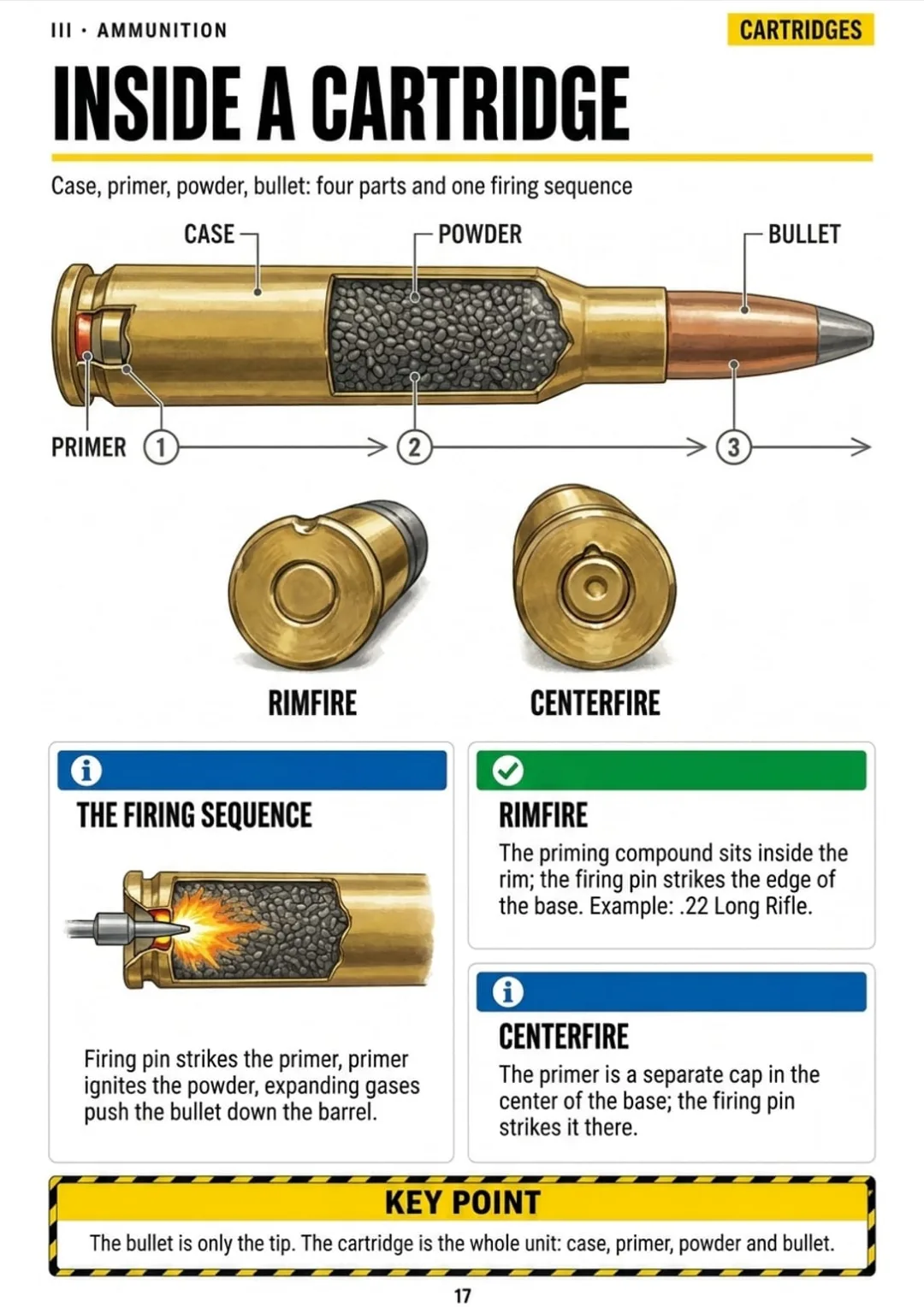
You're on the ammunition module of your online course and the quiz asks which part of the cartridge ignites the powder. You read it twenty minutes ago and you're already guessing.
That's not on you: the manual describes case, primer, powder and bullet in one paragraph, then adds rimfire and centerfire in the next. Four parts and two ignition systems, all in words, nothing to look at.

In this book the cartridge is one page. You see it cut in half: the case, the primer at the base, the powder inside, the bullet on top. Right next to it, rimfire and centerfire side by side, so you see where the firing pin strikes.
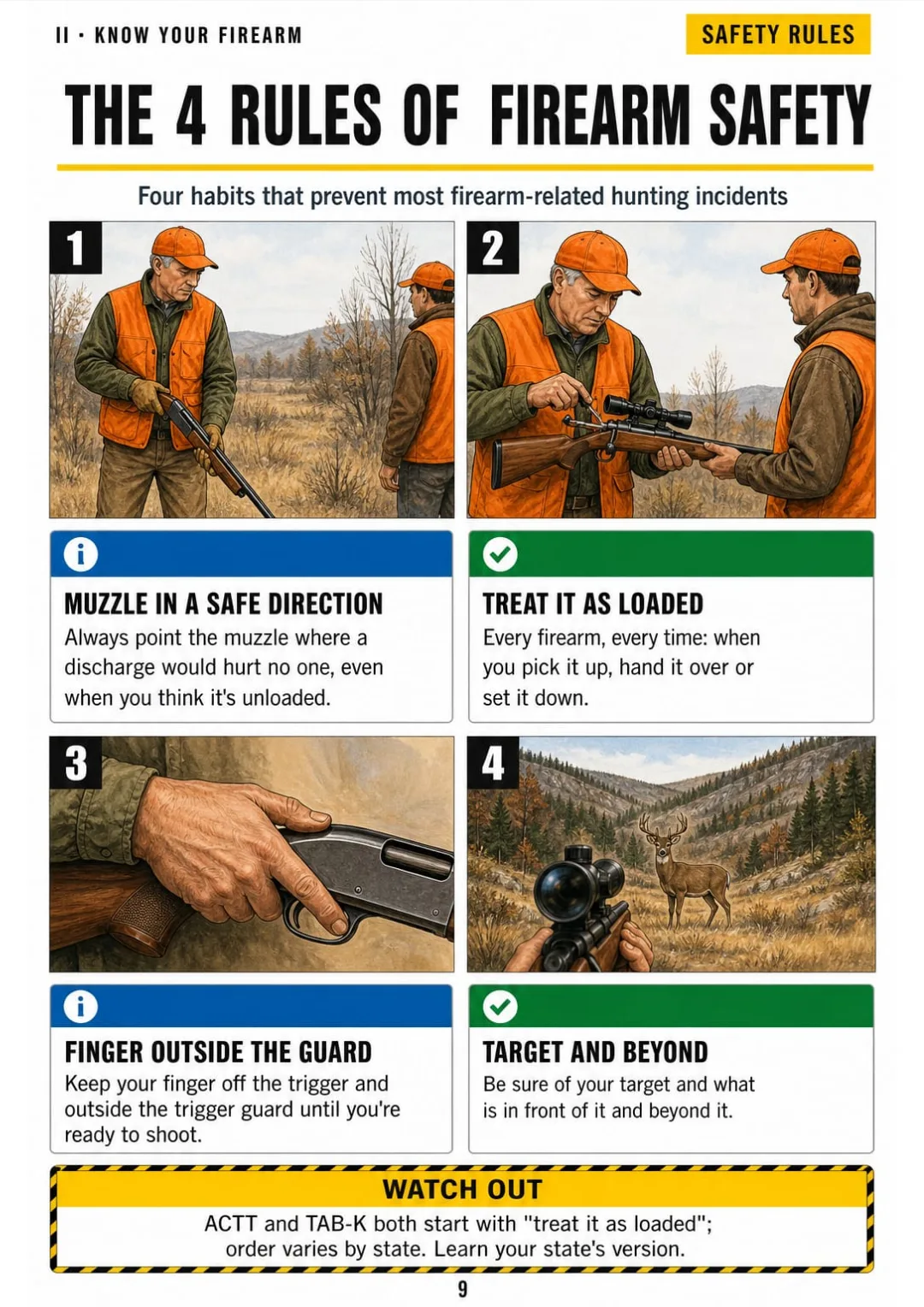
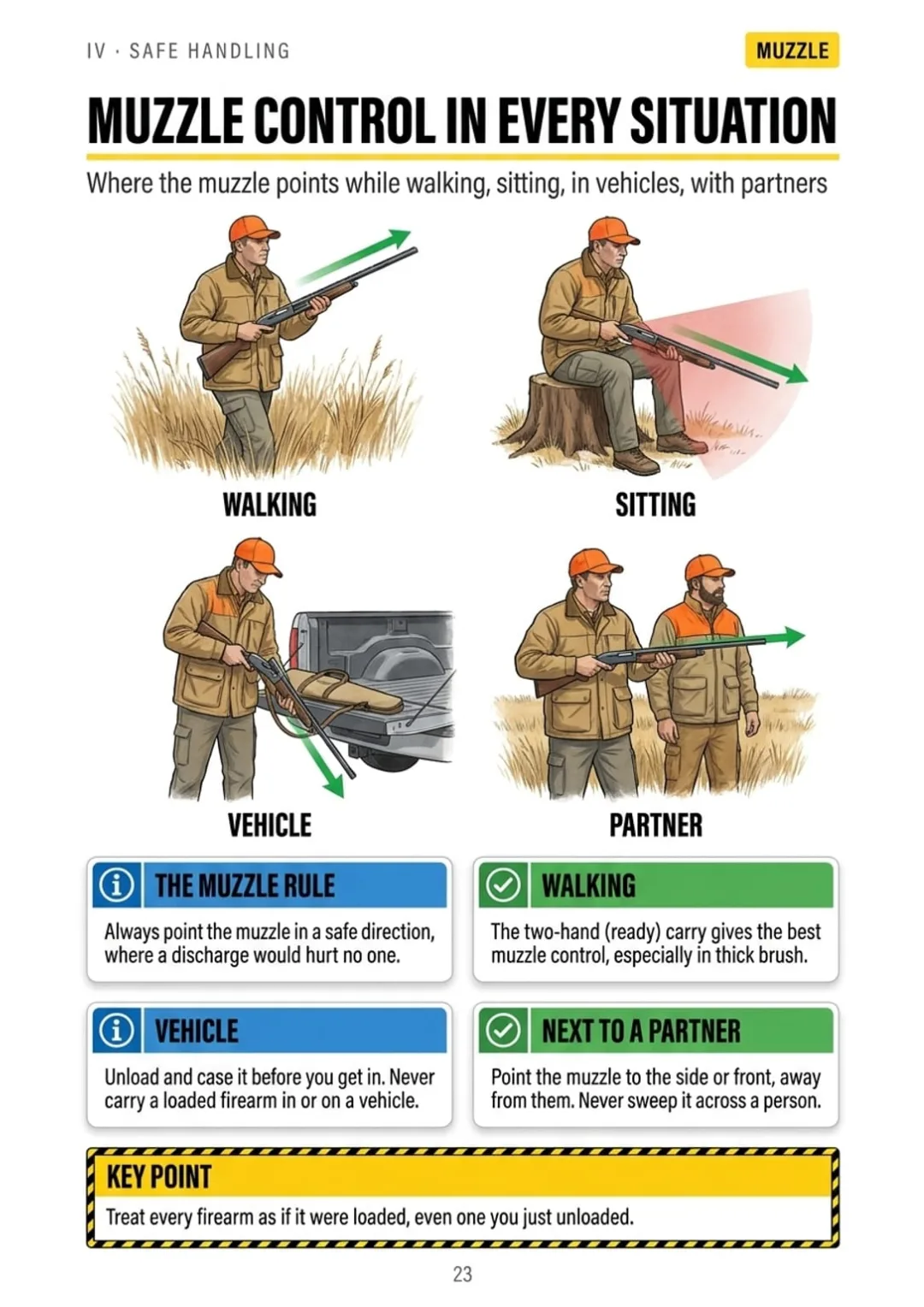
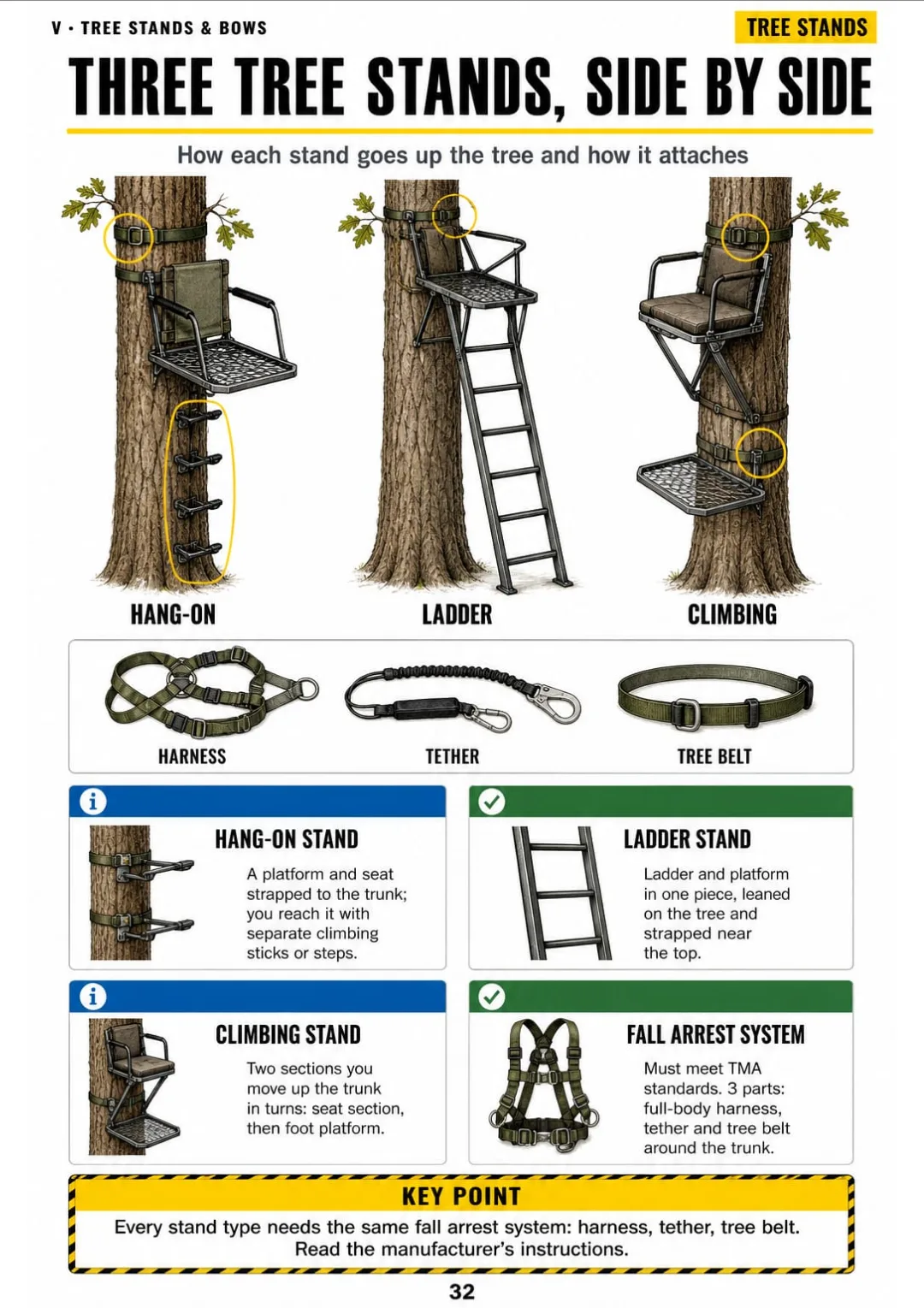
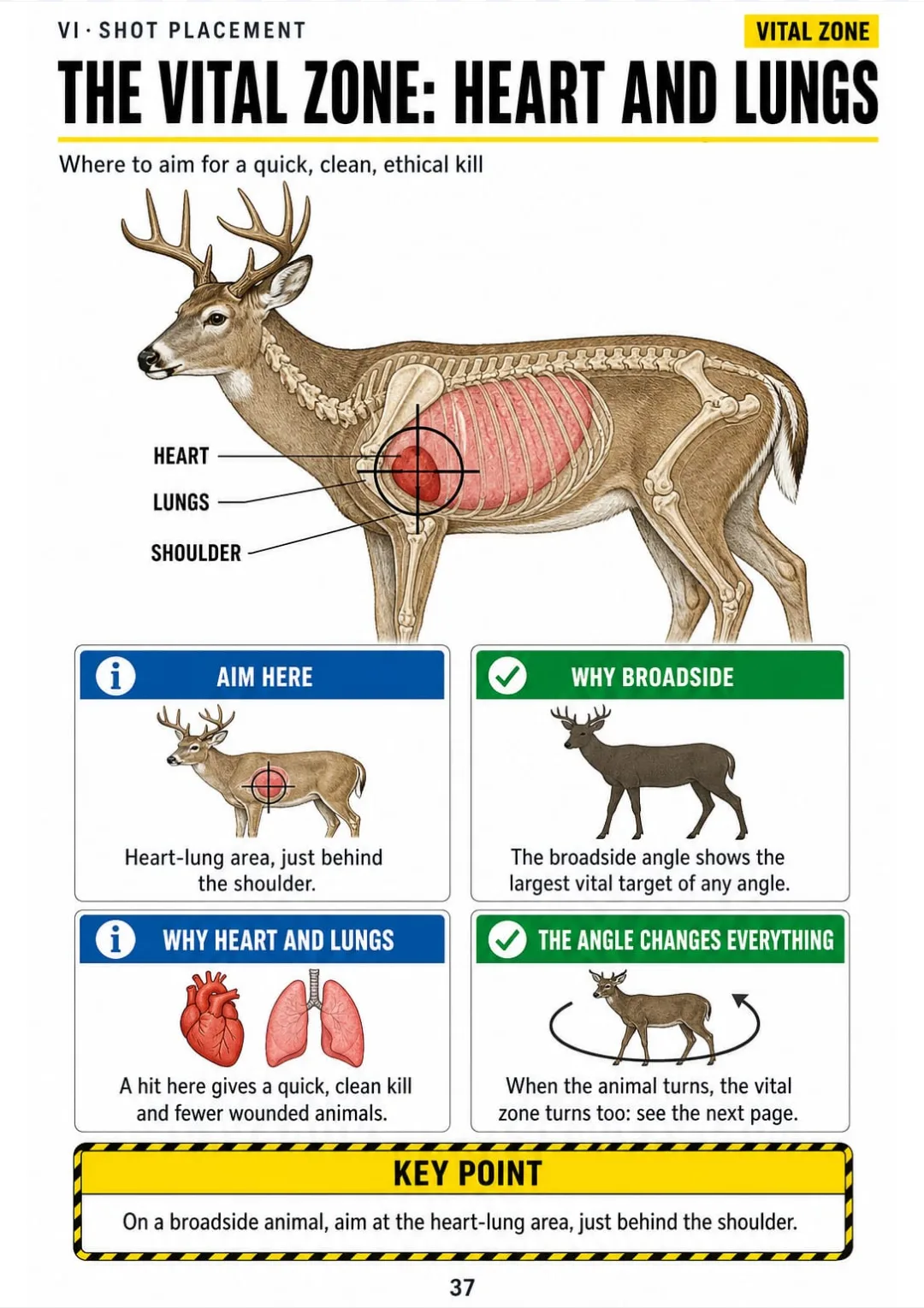
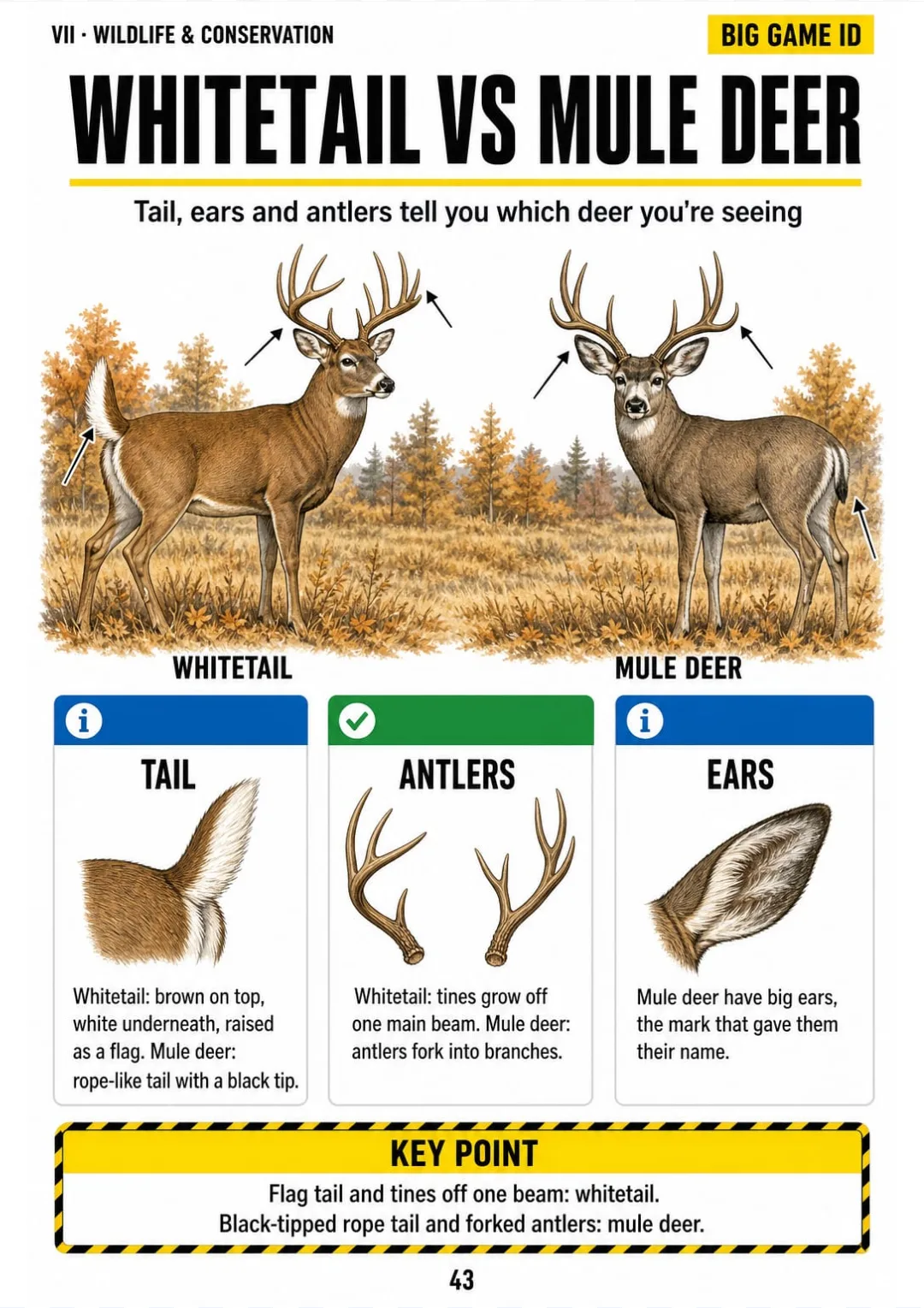
Every other topic works the same way: the 4 rules of firearm safety, zones of fire seen from above, the 3 points of contact on a tree stand, the vital zone inside the deer, whitetail vs mule deer.
You look at the page, you get it, and on the final exam you answer without going back to the manual.

Nine parts: Before You Start, Your Firearm, Ammunition, Safe Handling in the Field, Tree Stands, Muzzleloaders and Bows, Shot Placement, Wildlife ID and Conservation, Ethics and Laws, and Exam Review. 64 pages, all illustrated.
Think of it this way:
It's field day. The instructor hands you a shotgun, you're walking in line with two other students, and he's watching one thing: where your muzzle points.
In the book you open the muzzle control page and see it drawn for every situation: walking, sitting, in a vehicle, next to a partner, with the safe direction marked each time.

Same with zones of fire seen from above, the 6 carries, crossing a fence, the tree stand harness and the vital zone: each one on its own page.
Hunter Education Illustrated is 9 parts and 60 topics, all drawn, and it ends with a field day and final exam review: shoot-or-don't-shoot scenes, the most common mix-ups and a night-before checklist.
What you see drawn, you don't have to memorize.
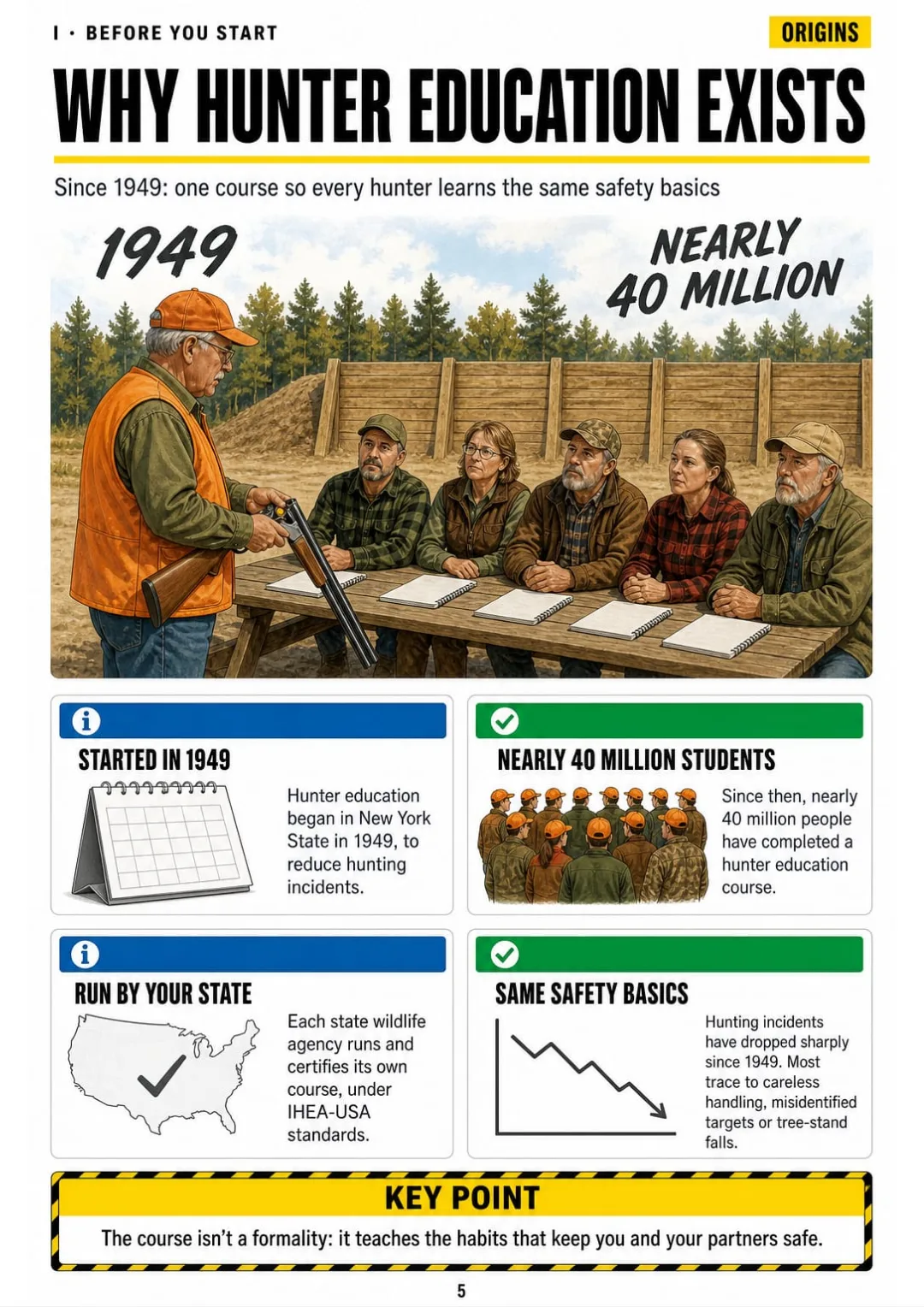
Why hunter education exists, how your state course works, using your card in other states and how to use this book.
The 4 safety rules, action, stock and barrel, rifles, shotguns and handguns, rifling, gauge and the .410, chokes, the 5 actions and the safeties.
Inside a cartridge and a shotshell, matching ammo to your firearm, the 20-gauge in a 12-gauge trap, how far a projectile travels, obstructions and misfires: so the wrong shell never goes in the chamber.
Muzzle control, the 6 carries, carrying with partners, zones of fire, blaze orange, fences, loading and unloading, vehicles, storage and alcohol.
Hang-on, ladder and climbing stands, full-body harness and 3 points of contact, the haul line, muzzleloaders, bows and crossbows.
The vital zone, broadside and quartering shots, shooting positions and range estimation, what to do after the shot, the blood trail and field dressing.
Whitetail vs mule deer, elk, moose and pronghorn, turkeys, ducks, geese and upland birds, habitat, the North American Model and the federal laws.
Fair chase, landowners and trespass, licenses, tags and seasons, poaching, your hunting plan, the survival kit, S.T.O.P., hypothermia and hunting from a boat.
What the instructor watches on field day, 6 shoot-or-don't-shoot scenes, the most common mix-ups, the numbers to remember and a night-before checklist: everything you review the evening before, in one place.
At the end of the book: A field day and final exam review: 6 shoot-or-don't-shoot scenes, the most common mix-ups and the numbers to remember.
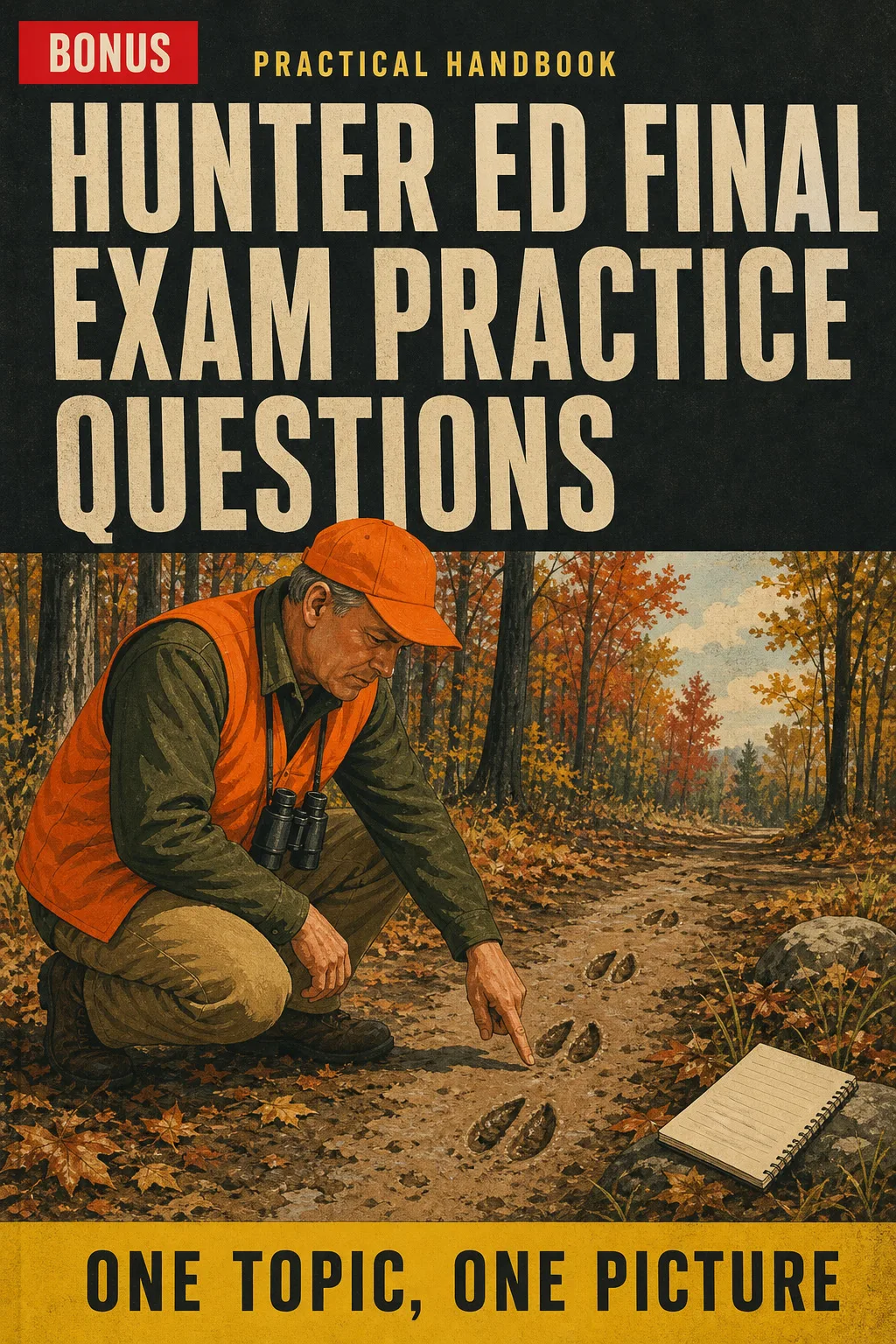
Practice with exam-style questions on every topic in the book, each answer explained with the page where it's drawn, so you know where you still hesitate before the real test.

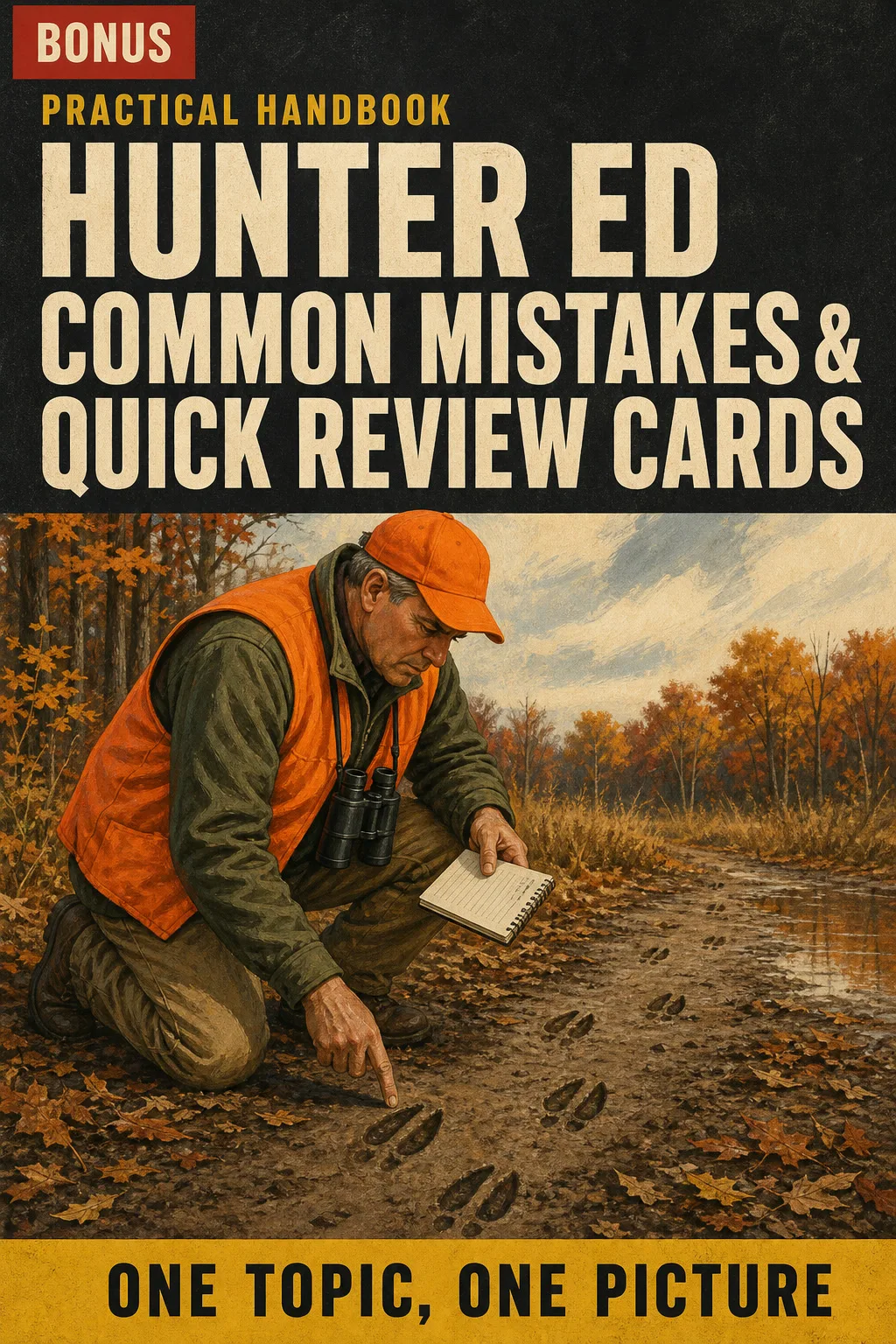
The mix-ups that come up most often (zones of fire, actions, whitetail vs. mule deer, hen vs. drake) on one-page review cards you can print and go over the night before.
📄 This is a digital PDF book sent to your email: nothing is printed or shipped.
PDF by email: We email you Hunter Education Illustrated as a PDF, together with the two free books. It's a single payment: no installments, no extra charges.
Print the page for the module you're both on and go over it together at the kitchen table: one drawing, one rule, nobody scrolling back through a screen.
The last part puts the field day, the most common mix-ups and the numbers in one place. The practice questions show you where you still hesitate.
What deer camp taught you is in there, plus what it didn't: zones of fire, actions, Pittman-Robertson and the North American Model.
📄 This is a digital PDF book sent to your email: nothing is printed or shipped.
Try Hunter Education Illustrated for 30 days, bonus books included.
We refund everything if the file won't open, if the book isn't what you see here, if you were charged twice or if the email doesn't arrive. Just email us.
You pay once. No subscriptions.
Yes. It starts from the basics, every topic is drawn, and it's easy to go over together: print a page and look at it with your kid.
From the topics state courses cover under the IHEA-USA standards, cross-checked with federal law: the Pittman-Robertson Act, the Migratory Bird Treaty Act, the Lacey Act and U.S. Fish & Wildlife Service rules for migratory birds.
It covers the topics state courses share under the IHEA-USA standards, so you can use it whichever state you take the course in. It's an independent study book, not affiliated with IHEA-USA or any state wildlife agency. Seasons, ages, blaze orange rules and limits vary by state: check your state's regulations booklet for those.
No. To get your card you still complete your state's course, its final exam and the field day if your state requires one. The book helps you prepare and review. It doesn't replace a first aid course either.
No. They're written for this book, in the style of a final exam, and each answer points to the page where it's drawn. They aren't official questions from any exam.
The book and the 2 bonus books come as PDFs by email, to the address you enter at checkout.
Keep using it: your state's course and its manual are what get you the card. This book covers the same topics another way: each one is a drawing on its own page, to look at before a module, print for your kid or go over the night before the field day.
Yes. It's a PDF you can print at home or at a print shop, the whole book or just the pages you need.
You have 30 days. We refund everything if the file won't open, if the book isn't what you see on this page, if you were charged twice or if the email doesn't arrive: just email us.
No more rereading modules that don't stick.
Muzzle control, zones of fire, the vital zone: you see them drawn, and that's it.
You walk into the field day and the final exam knowing where everything is.
Drawings make studying faster.
The book is right below.
One-time payment: US$ 27 · Guarantee: 30 days · PDF by email
YES, I WANT HUNTER EDUCATION ILLUSTRATED FOR US$ 27📄 This is a digital PDF book sent to your email: nothing is printed or shipped.